The name “Serengeti” is derived from the Maasai word “siringet,” meaning “the place where the land runs on forever,” aptly describing the park’s vast, open plains. The Serengeti’s history of conservation began in 1913 when Stewart Edward White, the first American to explore the region, documented his travels in the northern Serengeti. Upon his return seven years later, White camped in the Seronera area, hunting extensively and leaving a significant impact on the lion population. By 1921, the British colonial administration recognized the need for conservation and designated part of the region as a game reserve, later expanding it to a full reserve in 1929. These efforts culminated in the establishment of Serengeti National Park in 1951. To protect the wildlife further, the Maasai people were relocated to the Ngorongoro Conservation Area in 1959, ensuring the preservation of this remarkable ecosystem.
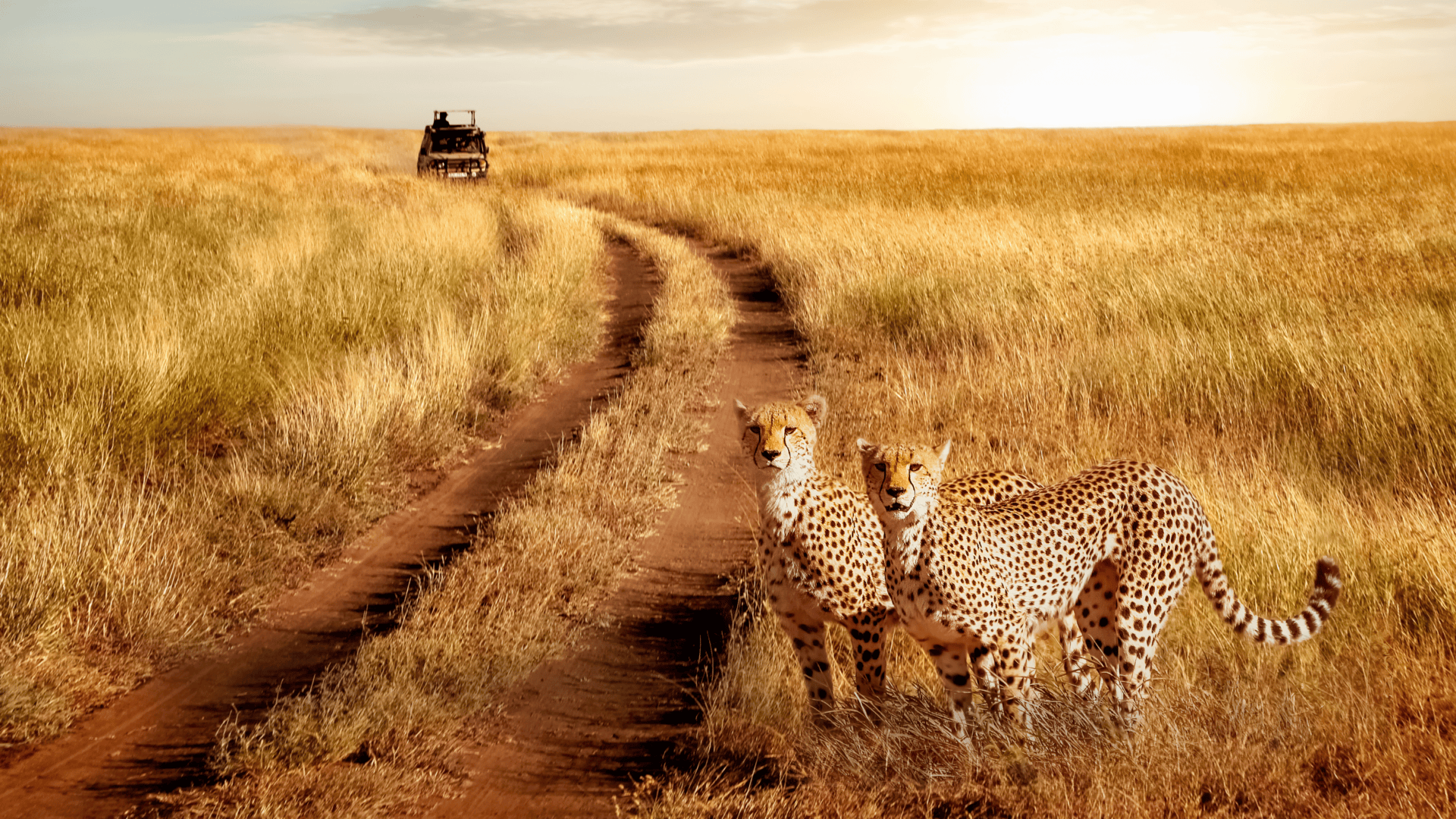
The Park can be divided into 3 sections. The popular southern/central part (Seronera Valley), is what the Maasai called the “serengit”, the land of endless plains. It’s classic savannah, dotted with acacias and filled with wildlife. The western corridor is marked by the Grumeti River, and has more forests and dense bush. The north, Lobo area, meets up with Kenya’s Masai Mara Reserve, is the least visited section.
Two World Heritage Sites and two Biosphere Reserves have been established within the 30,000 km² region. It’s unique ecosystem has inspired writers from Ernest Hemingway to Peter Mattheissen, filmakers like Hugo von Lawick and Alan Root as well as numerous photographers and scientists – many of which have put their works at our disposal to create this website.
The Serengeti ecosystem is one of the oldest on earth. The essential features of climate, vegetation and fauna have barely changed in the past million years. Early man himself made an appearance in Olduvai Gorge about two million years ago. Some patterns of life, death, adaptation and migration are as old as the hills themselves.
It is the migration for which Serengeti is perhaps most famous. Over a million wildebeest and about 200,000 zebras flow south from the northern hills to the southern plains for the short rains every October and November, and then swirl west and north after the long rains in April, May and June. So strong is the ancient instinct to move that no drought, gorge or crocodile infested river can hold them back.
Serengeti has the highest concentration of large mammals on this planet and its famous known for its 2,500 Lions the largest concentration found anywhere. The park also has over 518 identified bird species where some of them are Eurasian migrants who are present in the European winter months from October to April.
Accommodations: The Serengeti Ecosystem offers a variety of lodging options.
Distance: Despite being only 335 kilometers (208 miles) from Arusha, the Serengeti is still a very long drive because of the roads. It is advised to make a stop en route to the Serengeti National Park if you are traveling by car. It is best to arrive at the rim the afternoon before and spend the entire following day in the Ngorongoro Crater if you plan to visit it during your journey.
Best time to visit: December through July is the ideal time to see the wildebeest migration from Serengeti National Park to Maasai Mara National Reserve.


Copyright © Serengeti Pristine 2025. All rights reserved.
Serengeti Pristine Safaris
Typically replies within minutes
Any questions related to SERENGETI NATIONAL PARK?
WhatsApp Us
🟢 Online | Privacy policy
WhatsApp us